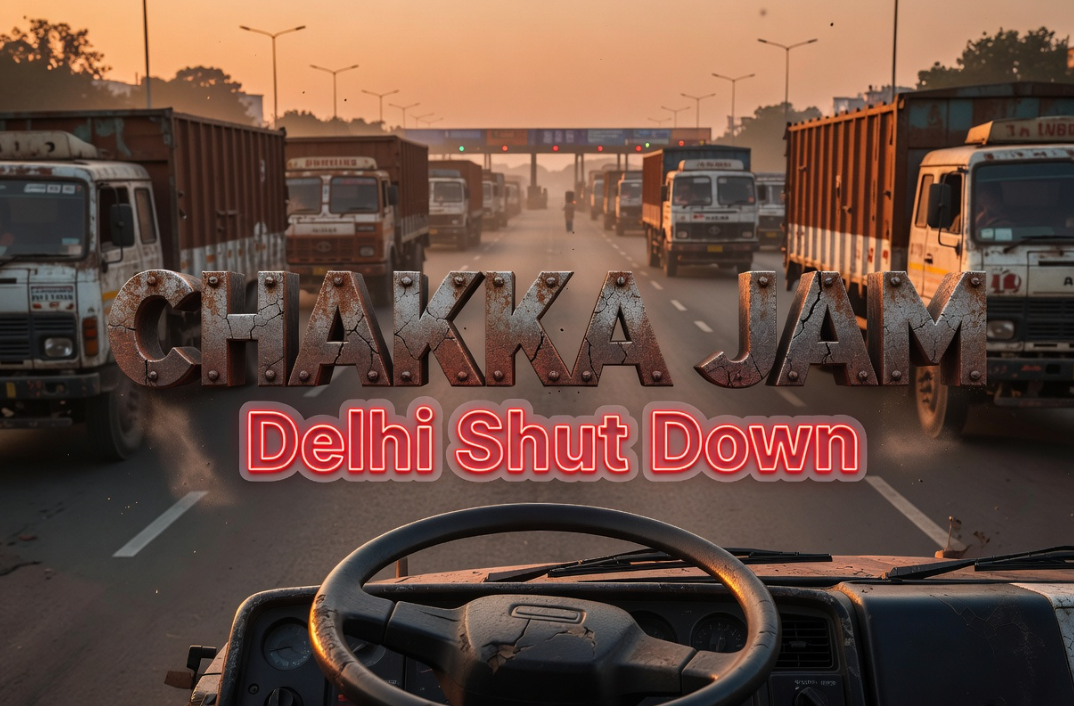
If you are in Delhi-NCR and struggling to find an auto or a cab this morning, you are not alone. Starting May 21, over 68 transport unions have launched a three-day chakka jam, and the city’s roads are already showing the impact. Here is everything you need to know about who is protesting, why it started, and what you should plan for the next three days.
Why Taxi and Truck Drivers Have Had Enough
The protest is being led by the All India Motor Transport Congress, or AIMTC, the apex national body representing truck drivers, private bus operators, taxi and maxi-cab drivers across the country. More than 68 transport associations and unions from across Delhi-NCR have formally backed the call to suspend operations from May 21 to May 23, 2026.
The biggest grievance from taxi and auto drivers is almost painfully simple: fare rates have not changed in nearly 15 years, while the cost of everything else has risen sharply. Chalak Shakti Union, one of the front-running unions, formally submitted this demand to the Delhi Lieutenant Governor and Chief Minister on May 19, 2026.
Anuj Kumar Rathore, vice president of the union, put it bluntly. The Delhi government introduced the taxi scheme in 2015 and it is now 2026, yet CNG prices keep climbing every few days while the fares drivers earn remain frozen in time.
Drivers also pointed to a pile-up of annual costs including vehicle fitness certificates, insurance renewals, and permit fees. The United Front of All Transport Associations, or UFTA, has also declared formal solidarity with the protests. AIMTC claims to represent nearly 95 lakh truck drivers and 26 lakh private bus, taxi, and maxi-cab operators across India, which signals just how wide the frustration runs.
The ECC Hike That Pushed Transporters Over the Edge
Truck operators are fighting a separate but equally sharp battle. The trigger is the recently revised Environment Compensation Charge, or ECC, a fee levied on commercial vehicles entering Delhi to curb pollution and discourage non-essential diesel traffic through the city.
A Supreme Court bench led by Chief Justice Surya Kant approved a major revision of these rates on March 12, 2026, accepting the Commission for Air Quality Management’s recommendations as “reasonable, just, and fair.” The new rates came into force from April 2026, and the Court also mandated an automatic five percent annual increase every April going forward.
Here is how the numbers changed:
| Vehicle Type | Old ECC Rate | New ECC Rate | Jump |
|---|---|---|---|
| Light vehicles and 2-axle trucks | Rs 1,400 | Rs 2,000 | +43% |
| 3-axle and 4-axle heavy trucks | Rs 2,600 | Rs 4,000 | +54% |
Transporters are not just angry about the size of the hike. They are angry about where the money has gone. According to data cited by AIMTC, a total of Rs 1,753.2 crore was collected as ECC from 2015 till December 2025. Of that, only Rs 781.4 crore was actually spent. That means Rs 971.8 crore, close to 55 percent of all collections, is sitting unused while Delhi’s air quality has not seen any meaningful improvement.
Transporters also oppose the proposed ban on BS-IV commercial vehicles entering Delhi, set to take effect from November 1, 2026. According to AIMTC Secretary General Naveen Gupta, the ban would directly affect the livelihoods and financial stability of more than 17 lakh truckers and their families. Transport experts argued that in Delhi’s slow-moving, stop-and-go traffic, BS-IV and BS-VI diesel trucks produce nearly the same tailpipe emissions, making the ban more of a financial blow than an environmental gain.
What Is Open and What Is Closed Right Now
If you are planning your commute today, here is what you need to know at a glance.
Services running normally:
- Delhi Metro (DMRC): Full normal operations, no disruption reported
- DTC and Cluster buses: Running as usual on all routes
- Private cars and two-wheelers: Fully operational
Services that will be disrupted or have limited availability:
- Auto-rickshaws: Significantly reduced availability on roads
- White taxis and radio cabs: Hard to find across the city
- Ola, Uber, and Rapido: Fewer drivers on the road, expect longer wait times and higher surge pricing
- Goods vehicles and trucks: Operations largely suspended under the AIMTC call
- Wholesale mandis: Risk of reduced supplies of vegetables, fruits, and daily goods
The timing of this strike is especially tough. Delhi is currently under an intense heatwave, with the Indian Meteorological Department issuing heat warnings across the region. On a normal day, most commuters rely on autos and cabs to avoid stepping out in scorching temperatures. That option is now far more restricted.
Traffic police have already deployed extra officers at key points across the city. Anyone heading to airports, railway stations, hospitals, or offices is being advised to leave much earlier than usual and make backup travel plans.
What Happens Next If These Demands Stay Ignored
The unions have been direct: this three-day strike is a warning shot, not the full extent of what they can do.
AIMTC President Harish Sabharwal has noted that approximately 1.7 million commercial vehicles across NCR are part of this shutdown. Around 6,000 goods vehicles enter Delhi every day from Kolkata, Nashik, and other major supply hubs carrying fruits, vegetables, medicines, and essential goods. Operators on those routes have fully backed the strike. A prolonged shutdown would hit markets, hospitals, and every household in the capital within days.
Here is a summary of what the transport unions are demanding:
- Immediate revision of taxi and auto-rickshaw fares, which have not changed in nearly 15 years
- Complete rollback of the revised ECC hike on commercial vehicles
- Full exemption from ECC for BS-VI vehicles and vehicles carrying essential commodities
- Withdrawal of the proposed ban on BS-IV commercial vehicles entering Delhi from November 1, 2026
If their demands are not addressed within two weeks, the unions have warned that protests will be intensified significantly. A joint protest rally by the Delhi Auto Rickshaw Union and the Delhi Pradesh Taxi Union is also planned at the Delhi Secretariat on May 23, the final day of the current strike.
This strike is years of suppressed frustration finally boiling over on the streets of one of India’s busiest cities. The drivers are not just fighting for a fare hike. They are fighting to be seen, to be heard, and to earn a living with some basic dignity after more than a decade of being ignored. Whether the government engages seriously with their demands in the next two weeks, or lets the situation drift toward a far larger and messier shutdown, will say a lot about how much it values the millions of hands that keep this city moving every single day. Share your thoughts in the comments below, especially if you are facing commuting trouble across Delhi-NCR today.