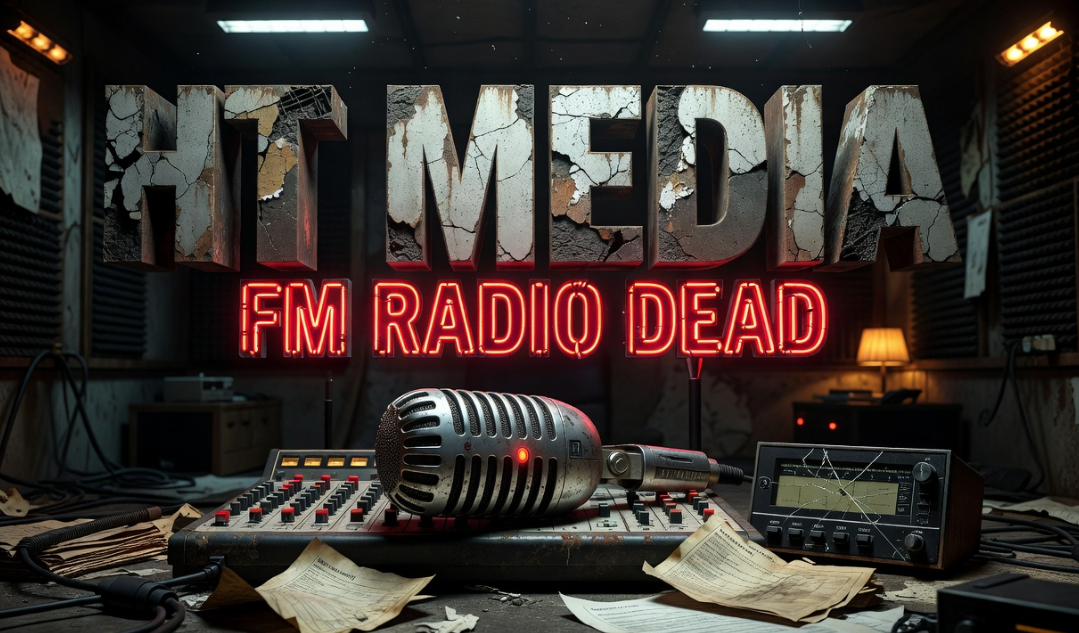
HT Media, one of India’s largest media conglomerates, has pulled the plug on its entire FM radio business. The company will surrender all its radio licenses to the government and stop broadcasting by June 15, 2026, marking the end of an era for three popular radio brands across five major Indian cities.
Why HT Media Is Exiting FM Radio
The decision comes down to money. HT Media stated in a stock exchange filing that its radio business has become “financially and strategically unviable.”
The numbers tell a grim story. In FY2024-25, the radio division earned just Rs 29.19 crore in revenue. That is only 1.62% of HT Media’s total consolidated revenue.
The combined net worth of all radio stations stood at negative Rs 172.08 crore, dragging down the parent company’s balance sheet by over 10%.
Meanwhile, HT Media’s overall consolidated net worth remains healthy at nearly Rs 1,666 crore. The radio arm had clearly become a financial burden the company could no longer justify carrying.
Three Radio Brands Across Five Cities Go Silent
The shutdown affects three distinct radio brands operating in India’s biggest metro markets:
| Radio Brand | Frequency | City/Cities | License Holder |
|---|---|---|---|
| Radio Nasha | 91.9 FM | Mumbai | HT Media |
| Radio One | 94.3 FM | Delhi, Mumbai, Bengaluru | Next Radio (subsidiary) |
| Radio Fever | 91.9 FM | Chennai | HT Music & Entertainment Company |
All three subsidiaries are now submitting voluntary surrender applications to the Ministry of Information and Broadcasting. HT Media emphasized that this is not linked to any government action, cancellation, or penalty.
The licenses being given up were valid for several more years. Radio Nasha’s license ran until March 2031, while the others were valid until March 2030. Walking away early signals just how deep the losses had become.
India’s FM Radio Industry Faces a Broader Crisis
HT Media is not alone in struggling with radio economics. The Indian FM radio industry has been under pressure for years, squeezed between falling advertising revenue and the explosive growth of digital audio platforms.
Listeners have steadily migrated to streaming services like Spotify, JioSaavn, and YouTube Music. Advertisers have followed them there, leaving traditional radio stations fighting for a shrinking pool of ad money.
Key challenges facing Indian FM radio today:
- Digital streaming platforms offering free, on-demand music
- Advertisers shifting budgets to targeted digital channels
- High license fees and operational costs that remain fixed regardless of revenue
- Limited ability to monetize content beyond local advertising
The pandemic accelerated this shift. While digital audio consumption surged during lockdowns, radio listenership never fully recovered in urban markets.
What This Means for Employees and Listeners
HT Media confirmed it has not entered into any sale agreement for the radio stations or their related divisions. This means there is no buyer stepping in to keep these stations alive.
For hundreds of radio professionals working across these five cities, the June 15 deadline brings uncertainty. Radio jockeys, producers, sales teams, and technical staff now face an industry with fewer opportunities than ever before.
Loyal listeners of Radio Nasha, Radio One, and Radio Fever will lose stations that have been part of their daily commutes and routines for over a decade.
Radio One, in particular, carved out a niche as an English-language station in Delhi, Mumbai, and Bengaluru, building a dedicated urban audience that few other stations served.
Is This the Beginning of the End for Indian FM Radio?
HT Media’s exit raises a difficult question for the entire sector. If a media giant with deep pockets cannot make FM radio work, what does that say about smaller operators?
The Indian government auctioned FM radio licenses expecting the medium to thrive. Several rounds of licensing brought dozens of players into the market. But the economics have shifted dramatically since those early days of optimism.
Some industry watchers believe consolidation is inevitable. Stations that survive will likely be those with the lowest operating costs or those backed by companies willing to absorb losses for brand visibility.
Others argue that radio still holds value in smaller towns and rural India, where internet penetration remains patchy and local language content drives engagement.
The closure of HT Media’s radio operations is more than a corporate restructuring decision. It reflects a fundamental shift in how Indians consume audio content. A medium that once dominated morning commutes and evening drives is now fighting for relevance in a world where every smartphone is a personal radio station with unlimited choices.
What are your thoughts on the future of FM radio in India? Share your views in the comments below.